Archive for the ‘Night Photography’ Category

Selecting Nikon Cameras and Lenses for Low Light Photography

Fireworks 5, Albert Park, Melbourne

When you are selecting a particular camera and lens for low light photography there are a few special issues to keep in mind and we will summarise some of the important considerations here.

In using high ISO settings bear in mind that if you use a tripod or monopod you can possibly use lower ISO settings and consequently get better image quality. High ISO is not necessarily always the best solution.

The Camera

With the camera the main issue to be aware of is the ISO capability of the camera.

DX Cameras

  • D3000 – ISO1600,
  • D3100 – ISO3200,
  • D5100 – ISO6400,
  • D7000 – ISO6400,
  • D300s – ISO3200.

FX Cameras

  • D700 – ISO6400,
  • D3s – ISO6400
  • D3X -ISO1600.

Many of the cameras indicated above do have ISO settings above those indicated, but the figures indicated above are the cameras maximum specified ISO, if an ISO setting above those indicated is selected, the image quality in respect to noise may not meet your needs. The above figures give a general comparison between cameras.

In general the best cameras for low light working in my opinion are the Nikon D700 and the D3s, these are both FX cameras with the larger sensor. The best DX camera for high ISO is the Nikon D7000.

Full details of the range of Nikon cameras are given in our Nikon Camera Review Section.

The Lenses

With lenses there are several factors affecting the low light capability of the lenses. Firstly the prime factor with lenses is the maximum aperture  and also a secondary consideration is whether the lens has the vibration reduction  (VR) functionality.

The maximum aperture with lenses can vary generally between f.1.4 and f/5.6. Here, there is an aperture variation of  four f stops and this variation can be a major issue when photographing in low light levels. Some lenses  have variable apertures and the aperture may vary from f/3.5 to f/5.6 as the lens zooms in and out from minimum to maximum focal length.

Many prime lenses have apertures varying from f/1.4 to f/2.8, an example of some of these lenses is as follows:

Nikon DX Lenses

  • 10.5mm f/2.8G ED AF DX Fisheye
  • 17-55mm f/2.8G IF ED AF-S DX
  • 35mm f/1.8G AF-S DX

Nikon FX Lenses (Full frame)

  • 16mm f/2.8D AF Fisheye
  • 14-24mm f/2.8G ED AF-S
  • 20mm f/2.8D AF
  • 24mm f/1.4G ED AF-S
  • 24-70mm f/2.8G ED AF-S
  • 35mm 1.4G AF-S
  • 50mm f/1.8G AF-S
  • 50mm f/1.4G AF-S
  • 60mm f/2.8G ED AF-S Micro
  • 70-200mm f/2.8G ED VR II
  • 85mm f/1.4G AF-S
  • 85mm f/1.8D AF
  • 105mm f/2.8G IF ED VR AF-S Micro
  • 200mm 2.0G ED AF-S VR II
  • 300mm f/2.8G ED VR II AF-S
  • 400mm f/2.8G ED VR

All of the above lenses are excellent lenses for low light photography, just select the lens based on the focal length you require.

Some of the best lenses for low light photography are the f/1.4 primes.

In using any of the above lenses with the VR functionality you will find that the VR facility will also be a great advantage when photographing stationary subjects. However VR is of no advantage when photographing moving subjects.

Full details of the range of Nikon lenses are given in our Nikon Lens Review Section.

Capturing Beautiful Fireworks Images On Your Camera

Fireworks, Broadwater Parklands, Southport, Gold Coast, 1.

New Years Eve is a wonderful time for practising your fireworks photography skills. Once you have refined your fireworks techniques, fireworks are quite easy to capture.

Two main accessories will be required to capture the fireworks, a stable tripod and a remote release cable. For the fireworks, I used a Manfrotto 190D tripod and a Nikon MC-36 Multi-Function Remote control unit, a Nikon D700 camera and a 50mm f/1.8 lens.

The camera will need to be set to the lowest ISO setting, in this case it was ISO200 and an aperture of around f/8 to f/16 should be satisfactory. Generally I will use the camera set to the manual setting and the shutter speed to Bulb, and I hold the shutter open for several seconds to ensure I capture enough of each burst of the fireworks. Set the camera to manual focus and focus the lens manually on one of the fireworks bursts.

You images will look much better if you can get many bursts on the one frame. To achieve this I generally copy several images into Photoshop and place them in separate layers. The Layer Blending Mode will need to be set to “Screen” for all the fireworks images to be visible.

So on your next fireworks night get your camera out and go for it. Get some wonderful images.

Fireworks, Broadwater Parklands, Southport, Gold Coast, 2.

Night Photography with a Digital Camera
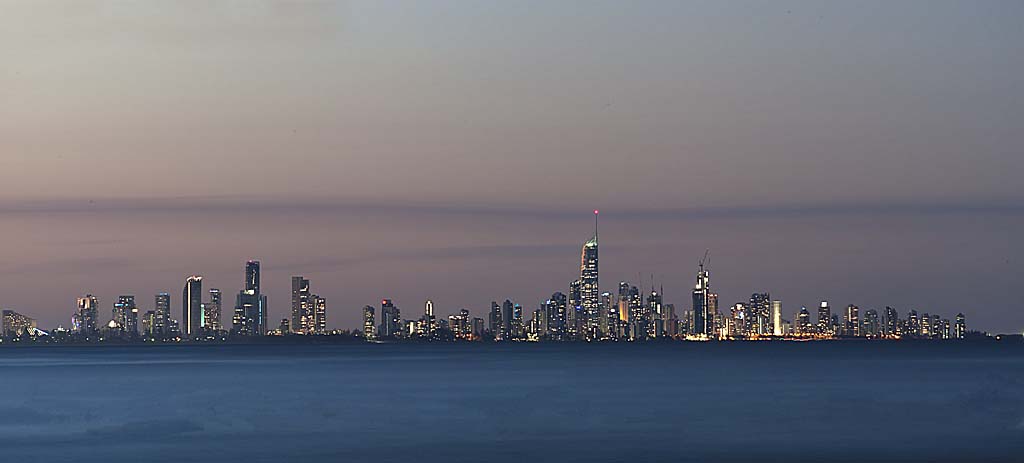
Surfers Paradise from Currumbin

Surfers Paradise from Currumbin

The above image has been captured from the Currumbin beach, looking towards Surfers Paradise, I took this image at the following camera settings:

  • Aperture, f/16,
  • Shutter speed, 30 seconds,
  • 300mm lens,
  • 100 ISO.

The images is a panorama of two images stitched together in Photoshop and it was quite dark when the image was captured. The reason I took the image at such a low shutter speed of 30 seconds, was to create a blurred effect over the water and in the clouds. The camera used was a Nikon D700. The image was taken after dark using a tripod and a remote cable release.

Even during daytime similar images can be captured, using a neutral density filter, so that the shutter speeds can be greatly reduced.

Night time is a great time to catch a panorama image. At this time the lighting is very subdued and even.

Always be prepared to get your camera out at night, with the capabilities of today’s cameras with high ISO, great night images can easily be captured.

The lighting just after dusk is generally excellent for exceptional lighting and sharp images can be obtained by using a tripod and cable release. A tripod was essential for the above image as the exposure was 30 seconds with a long 300mm lens.

Photography by Moonlight

Moonlight

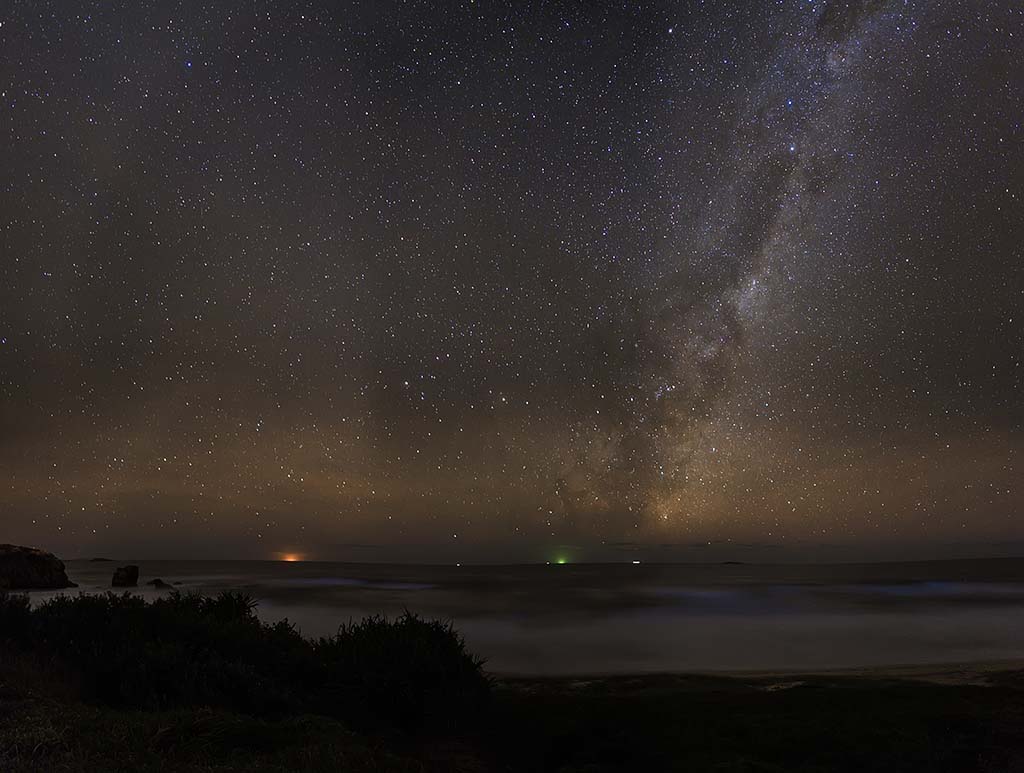
Todays cameras with their high ISO capability give us a great opportunity to capture images at night time under Moon light.

As your eyes can adjust to moonlight to enable you to see, your camera can also do a very good job of exposing an image provided that you understand a few basic techniques and have the right equipment to do the job.

The Moon reflects sunlight and provides about 1/20th the amount of light the Sun provides. For moonlight images long exposures will be required and consequently some means of supporting the camera will be required such as a tripod and a cable release to help steady the camera.

For moonlight images the faster the lens the better, lenses with an aperture of f/2.8 or even f/1.4 will be ideal. Also set the camera to a high ISO setting.

The image above was captured at Ubirr, Kakadu National Park Australia.

Lightning Images

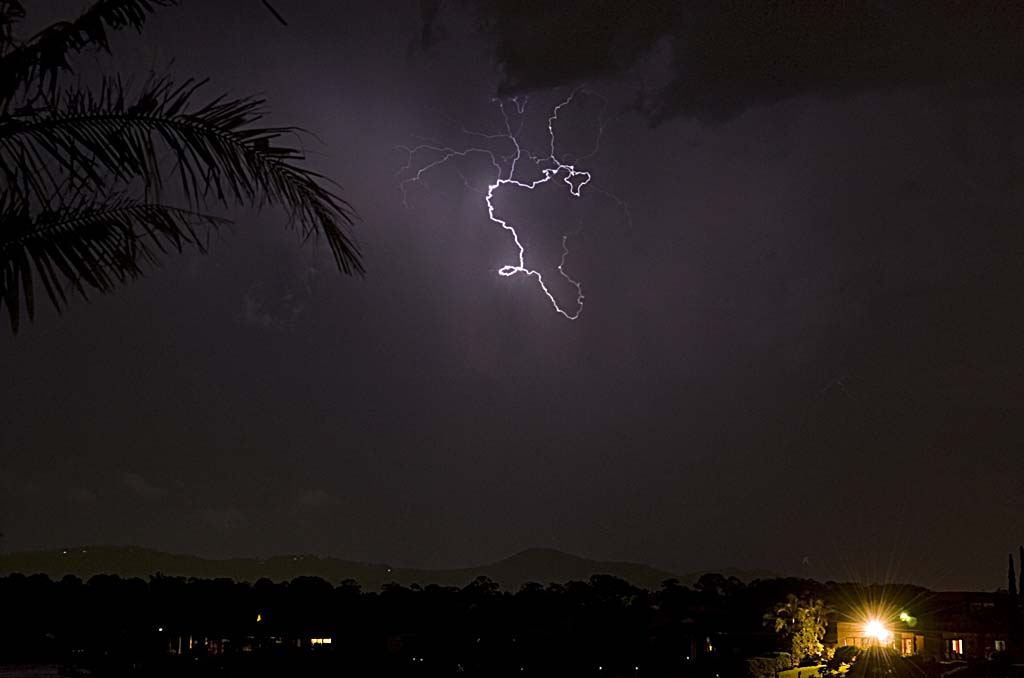
Lightning images are generally very stunning. They are very similar to fireworks to capture. However to capture those instant moments with a camera can be quite is a challenge as lightning is very unpredictable and difficult to judge where it will strike. It is best to attempt to capture lightning images at night time. It is essential to use a tripod to hold the camera steady. Tripods can be inconvenient to use however they will improve your images greatly. A cable release can also be very usefull to eliminate any camera movement.

Find a suitable spot where you will have a clear view with possibly some interesting objects in the foreground. Also try to stay away from any street lights which may introduce flare into your lens.

An exposure time of around 1 to 30 seconds is generally good depending on the frequency of the lightning, you may even like to use shutter speeds longer than that. Use an ISO speed of 100 to 200, which should assist in keeping the noise to an acceptable level with your digital camera. An aperture of around f/5.6would be good as a starting point to try as the value will depened on the brightness of the lightning.

Set your focus to infinity and set the camera to manual focus. Bring a small flashlight so that you can see the camera controls and settings. Turn the camera flash off.

Lightning with Palms

Lightning across Lake

Fireworks Photography

Fireworks

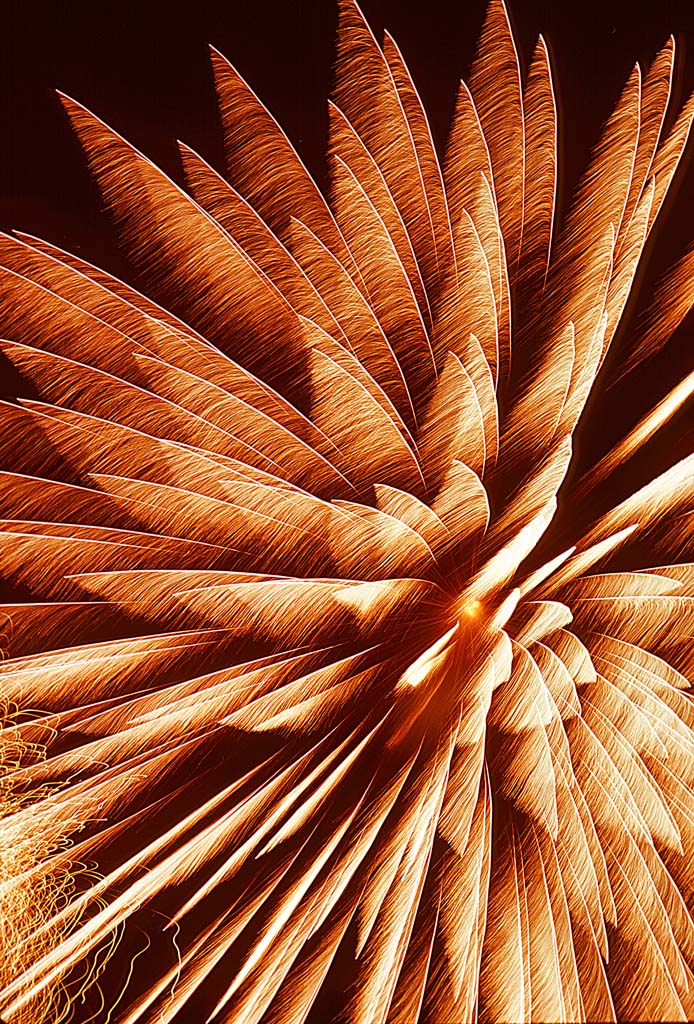
Fireworks displays are generally very stunning and colorful. To capture those moments with a camera can be quite is a challenge. It is essential to use a tripod to hold the camera steady. Tripods can be inconvenient to use however they are almost essential to get stunning images. A cable release can also be very usefull to eliminate camera movement.

Find a suitable spot where you will have a clear view of the fireworks display. Also try to stay away from any street lights which may introduce flare into your lens.

An exposure time of around 1 to 4 seconds is generally good, you may even like to use shutter speeds longer than that. Use an ISO speed of 100 to 200, that should keep the camera sensor noise to an acceptable level. An aperture of f/5.6 to f22 would be a good range to try as the value will depened on the brightness of the fireworks.

Set your focus to infinity and set the camera to manual focus. Bring a small flashlight so that you can see the camera controls. Turn the camera flash off.

A multiple exposure to capture many bursts of fireworks on the one frame can add greatly to the visual impact of your fireworks images. An example of a multiple exposure is shown below.

Fireworks Multiple Exposure

Photography At Night

Great images are to be had by venturing outside at night time. A dull city can become a colorful blaze of bright lights at night.

Most cameras are capable of exposures up to 30 seconds, however once you start to exceed exceed this then the camera control moves from the precision of the camera’s light meter to some guess work on your part.

You will need a camera with a bulb mode to enable the shutter to stay open for some time, also some fast lenses with apertures of f/2.8 or better, may be required. You can overcome the use of low apertures by extending the exposure time.

Place youir camera on a tripod to keep it stable during the long exposures and use a cable release to keep the camera steady during the exposure.

If you photograph traffic with moving lights you will get interesting effects with the moving lights causing lines in the image.

Disneyland Tokyo

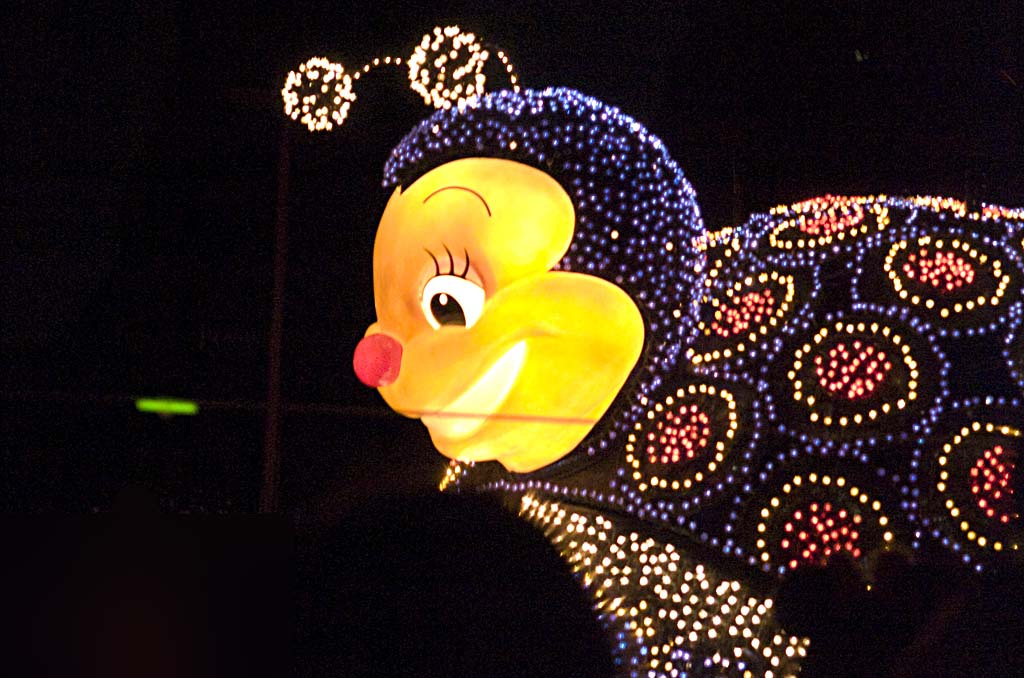
Night time street parades are great photogrsaphic opportunities. This is at Disneyland, Tokyo


Shibuya Tokyo

Shibuya, Tokyo at night

Disneyland Tokyo

A night image at Disneyland Tokyo

Sunset Photography

Sunset at Illuka

Most photographers can not resist the temptation to shoot every sunset that they see. Every new sunset you see may be the best one you have taken yet.

In Photoshop you can reproduce the sunset in any red hue that you desire and with any color rendering that you think you can remember. You can also change the exposure, introduce more contrast to create a silhouette. Sometime darkening the image slightly in Photoshop will also give more dynamic colors and saturated colors.

The above sunset at Illuka has had a slight increase in the saturation, together with a slight contrast change.