Archive for the ‘Exposure, Aperture, Shutter Speed, ISO’ Category

Photographic Exposure

With any camera the digital sensor or film needs to receive the correct amount of light for the final image to be correctly balanced in respect to the intensity of the light and the colors and tone of the image. If the sensor receives too much light the image will be washed out and light toned, if the image receives insufficient light the image will be too dark and may appear muddy. If the images receives the correct amount of light the images will be well balanced in respect to colours and tone.

The exposure of the image in a camera is dependant on several factors, the lens aperture or f-stop, the shutter speed and the ISO speed of the digital sensor or film and all these factors interact to give the correct exposure. A basic understanding of these aspects will give you more flexibility and options in your photographic endeavours.

All modern digital cameras have a built in exposure meter which controls the amouint of light that the sensor receives. As mentioned above there are three variables, aperture, shutter speed and ISO speed. With most cameras you can set the camera to a Programme Mode where the camera will set the ISO, shutter speed and aperture. However you will have more flexibility in setting the camera to suit the particular conditions if you take more control over the camera. Aperture Priority Mode will allow you to set the aperture and ISO and the camera will automatically set the shutter speed. A low apperture eg f1.4 or f2.0 will allow creative selective focussing and a higher apperture will allow a greater depth of field to allow more of the image, both close up and distance to be in focus. Shutter Priority Mode will allow you to set the shutter speed and ISO and the camera will automatically set the aperture. A low shutter speed wil allow you to create creative blurred effects and a high shutter speed will allow you to freeze fast action movement.

Setting the Exposure

Softer diffused light available in open shade or with overcast skies will require generally several stops more exposure than a bright scene.
The cameras light meter is designed to give an average reading of the light in the scene and may not be an accurate guide to achieve the results you want.

If the camera meters off a very bright area such as snow, the camera will set the exposure assuming that the snow is a mid tone and a modification may need to be given to the exposure may require additional exposure to compensate for the brightness of the snow. Also when the camera meters of a dark area the exposure may requireless exposure to compensate for the dark area.

Many cameras provide a bracketing function to automatically take additional images that give additional exposure or less exposure as required to give a correctly exposed image. A correctly exposed image will give a more richer and highly saturated look to the image.

Correctly Exposed Image

Over exposed 1 Stop

Over Exposed 2 Stops

Over Exposed 3 Stops

Over Exposed 4 Stops

Under Exposed 1 Stop

Under Exposed 2 Stops

Under Exposed 3 Stops

Under Exposed 4 Stops

Shutter Speed

The shutter speed of the camera indicates how long the shutter remains open to let the light through to the film or the digital sensor.

The number series for shutter speed in seconds are as follows:

30, 15, 8, 4, 2, 1, 2, 4, 8, 15, 30, 60, 125, 250, 500, 1000, 2000, 4000, 8000, 16000

In the above series, the numbers to the left of 1 second are whole seconds and to the right of 1 second are in fractions of a second. They are not expressed on your shutter speed dial as fractions because of space limitations but they are in reality fractions as follows:

30, 15, 8, 4, 2, 1, 1/2, 1/4, 1/8, 1/15, 1/30, 1/60, 1/125, 1/250, 1/500, 1/1000, 1/2000, 1/4000 ,1/8000,

Again, each number moving to the right in the table is half the value of the preceding number, and represents half as much light getting to the film or sensor as the previous number, which is the equivalent of one stop of light.

Slower shutter speeds will give a more blurred image and faster shutter speeds will help eliminate camera shake. A good rule to reduce camera shake is to use a shutter speed faster than the focal length of the lens in use. For example with a 100mm lens use a shutter speed of 1/100 of a second or shorter.

Most cameras limit the slowest shutter speed to around 30 seconds, however remote control units are available to extend the range of shutter speeds beyond 30 seconds. For Nikon cameras on of the best remotes is the Nikon Remote Cord MC-36.

Some high level cameras may give a shutter speed range higher and lower than those indicated above.

Sometimes you may want to deliberately cause blur in images. In capturing subjects such as waterfalls or flowing rivers it can sometimes enhance the image by using a slow shutter speed to cause the flowing water to have a velvet type look. A neutral density (ND) filter over the lens can assist greatly to use long shutter speeds and cause this blur effect. I have managed to create some very interesting effects using slow shutter speeds and ND filters..

When using longer lenses greater than 100mm fast shutter speeds are desired to help freeze the action, this is where high ISO capable cameras are great to give more capability to use higher shutter speeds.

The current day cameras have far greater capability and flexibility to provide more options in relation to giving photographers greater access to a wider range of shutter speeds.

So start being creative and try some long exposure images. Bear in mind that when using long shutter speeds and ND filters you will need to use a tripod and a remote release to help stabilise the camera.

Lens Aperture

The aperture of the lens refers to the size of the opening inside the lens where the light passes through to reach the film or or the digital sensor.

The aperture is measured in f-stops as indicated by the series below:

f/1  f/1.4  f/2  f/2.8  f/4  f/5.6  f/8  f/11  f/16  f/22  f/32  f/45  f/64

Each progression in aperture or f stop to the right in the above table lets half as much light through the lens as the preceeding number.

The f-stop number represent the ratio of the focal length of the lens to the diameter of the lens diaphragm opening of the lens and is calculated as follows:

Lens f stop, f = D/F

Where: D = Diameter of the lens iris

and F = Focal length of lens

A higher aperture (between f/16 to f/64) will give greater depth of field but will also let less light to the film or sensor thus requiring lower shutter speeds. A lower aperture (f/1.4) will give a smaller depth of field but will also enable you to separate a subject from the background by selective focus. Generally a lens is referrred to as a fast lens when it has a large aperture opening, equal to or greater than f/2.8.

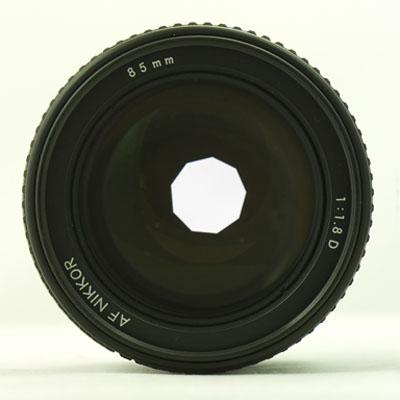
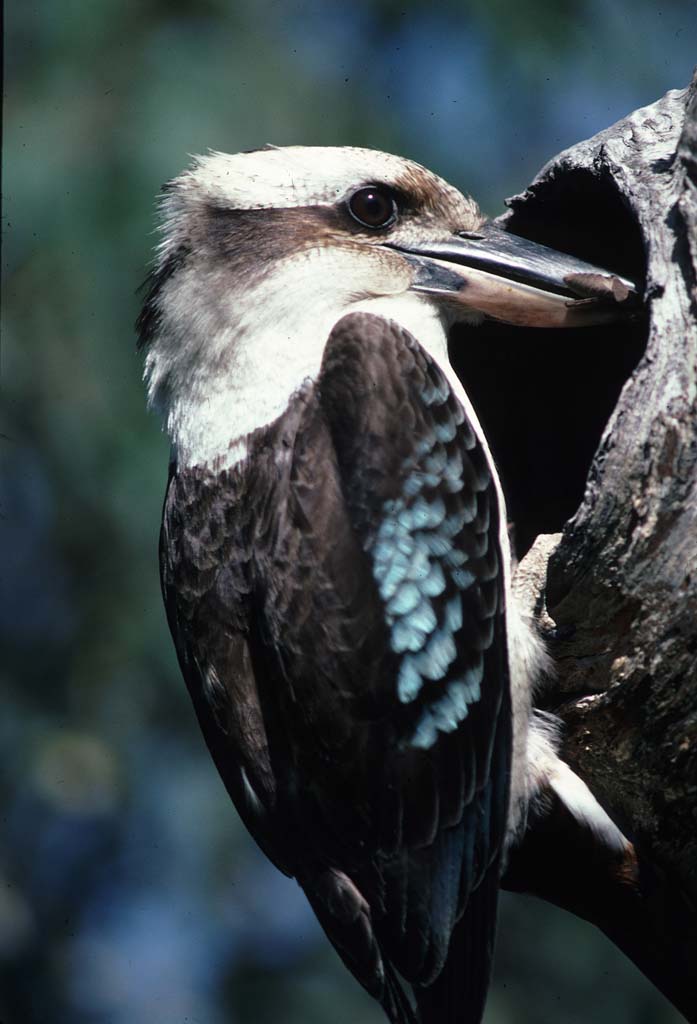
Aperture f/1.8

Aperture of f/1.8 in an 85mm lens gives shallow depth of field.

Aperture f/5.6

Aperture of f/5.6 in 85mm lens will give
reasonable depth of field and shutter speed.

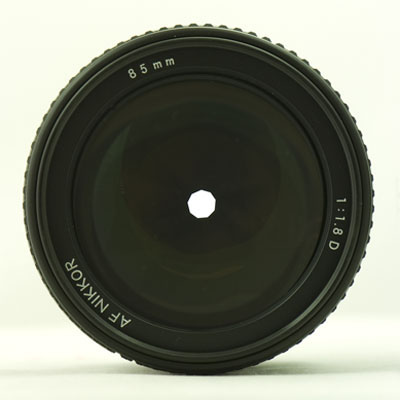
Aperture f/16

Aperture of f/16 in a 85mm lens will give great
depth of field but requires a higher
shutter speed.

Principles of Photography

The Light

Photography is essentially about capturing light. Most of the light we capture in photography is reflected light from objects. There are exceptions such as the blazing light from a fire or light from a burst of fireworks or lightning. Light can be of a difuse nature, not emanating from a fixed source and this type of lighting can produce a very subdued and pleasing effect. Light can also be from a point source be very harsh and produce very hard shadows. Light can also come from different sources to produce different color effects. In every day life we see daylight, moonlight, artificial light, tungsten, fluorescent, infrared, flood lights, mercury vapour lights. In photography light creates the image. Light travels in straight lines and the further it gets from the source the weaker it gets.

In photography we learn to take advantage of the light. We may prefer front lighting, side lighting or back lighting. We may prefer harsh midday sun or we may prefer the softer sunset lighting with its bright red hues.

The Lens and Camera

The camera lens can be compared very closely to the human eye:

  • The eye has a liquid crystaline lens the camera has a glass lens
  •  The eye has an eyelid, the camera has a shutter
  •  The eye focuses light on the retina, the lens focuses light on the sensor or film
  •  The eye has an iris, the lens has a diaphram to control the amount of light

The lens will focus a parallel beam of light from the subject being photographed to an inverted image of the subject on the sensor or on the film. As the subject distance varies from infinity to close up to the camera the lens will need to be adjusted or focused to ensure that the image on the sensor remains sharp. This focusing can be done manually by the photographer or automatically by the camera. An important part of the camera is the viewfinder which ensures that the photographer can see that the subject is in focus and that the photographer sees the subject the correct way up and not inverted like the sensor or film. There are many other details of the camera which will be discussed on this site and in further articles. Some are listed as follows:

  •  Exposure
  •  Lens Aperture or f-Stop
  •  Shutter Speed
  •  ISO
  •  Exposure Value
  •  Color Temperature (White Balance)
  •  Lenses and Focal Length
  •  Focussing and Depth of Field
  •  Long Exposure
  •  Dynamic Range
  •  Digital Camera Sensors

Further details on these topics can be found in the menu to the right of this article.