Archive for the ‘Bird Photography’ Category

Long Lens Techniques For High Image Quality

Butcher Bird 2

One of the most difficult things to learn with the super telephoto lenses are the techniques to help get high image quality. By referring to super telephoto lenses I am talking about lenses of 300mm or longer particularly the longer range of lenses.

Bear in mind that if you are using expensive super telephoto lenses you need high quality support systems.

There are several options when using these long lenses which are summarised as follows:

Hand Held

Hand holding a very long lens is not always the best way to capture sharp images, although with some of the latest lenses which incorporate Vibration Reduction, hand holding can provide a good option.

I find that one of the best ways to hand hold a long lens is as follows. Place your left hand on your right shoulder, hold the camera with your right hand and balance the camera on your left arm which is supported by your shoulder.

Another good hand holding method is to hold the camera with your right hand and place the lens on the palm of your left hand with your elbow rested and supported by your body.

Monopods

Monopods are very convenient as they can generally be used in crowded spaces without hampering others near you in a crowded area.

When using a monopod think of it as a tripod, with two of the legs being your own legs and the monopod itself being the third leg of the tripod.

An excellent compact monopod for very large lenses is the Gitzo GM5561T Traveler 6x Carbon Fiber Monopod.

Monopod Heads

When using a monopod, a monopod head is very useful to attach the camera or lens and to make it easier to use.

One of the excellent heads is the Kirk MPA-1 Swivel Tilt Monopod Head. If you are using a head such as this you will need to get an Arca Swiss compatible plate for your lens.

Tripods

The tripod is our three legged friend. A good tripod system will improve your images to the best quality possible.

One of the best available tripods is the Gitzo GT5531S Systematic 6X Carbon Fiber Tripod Legs, this tripod will enable you to support lenses up to 600 to 800mm.

Tripod Ball Heads

An important part of the tripod is the tripod head, a ball head is very useful for general tripod usage however the best solution for long lenses si the gimbal head. An excellent tripod head is the Arca-Swiss Monoball Z1 sp (Single Pan) Ballhead with Quick Release. With this ball head you will also require specific plates for you lens or camera.

Tripod Gimbal Heads

Gimbal heads are excellent to facilitate the easy handling of your long lens, the theory of gimbal heads is such that the lens appears weightless when handling the lens but also gives exceptional stability.

There are essentially two types of gimbal heads, the side mounting type the Wimberley Sidekick Gimbal Head Adapter for Arca-Swiss Style Quick Release Clamps or the full gimbal Wimberley WH-200 Tripod Head II with Quick Release Base.

Camera Settings

Yes camera settings can have an impact when using long lenses as these lenses are far more subject to camera movement.

  • Use fast shutter speeds.
  • If you are using slow shutter speeds set the vibration reduction switch to on.
  • Use mirror lock up if possible.

Tips for Sharper Bird Photography Images Using the Nikon 300mm f/4.0

Rainbow Bee Eater - Goodna

This image of a Rainbow Bee Eater has been captured at Goodna, near Brisbane. I went there to see the beautiful Jacaranda trees in flower but there were plenty of birds around to side track me.

The above image was captured at ISO500, f/11, 1/320 second exposuere time.

Images like this are very difficult to capture with great detail.

There are several tips which can be applied to help you get sharper bird images when using long lenses.

  • In general I find it easier to use a lens which is not too large or too heavy. I really like my 300mm f/4 lens for this reason. Some of the bigger lenses with more reach, are far more difficult to handle, for example 400, 500 and 600mm lenses.
  • I prefer to hand hold my lens and use a monopod, I find that hand holding, gives far more flexibility in being able to  stalk and approach birds.
  • A monopod will give a big advantage in keeping your camera steady. My 300mm lens does not have vibration reduction, however with the monopod I have captured images at shutter speeds down to 1/60 second and still retained excellent sharpness.
  • If you get to know your camera at higher ISO levels, it will help you to get sharper images by using higher shutter speeds, so up the ISO as required.
  • Be careful in using low apertures, as at low apertures the depth of field can become very narrow. The depth of field will also get very narrow as you focus closer to the subject.
  • When operating the shutter button do not depress the button suddenly ,it is best to gradually roll the finger over the shutter button gradually as this will help avoid moving the camera.

Bird photography is one of the most difficult subjects to photograph so just practice and practice.

Learning to Photograph Birds At Your Local Botanical Gardens Using the Nikon 300mm f/4.0

Butcher Bird

Generally your local Botanical Gardens is a wonderful place to learn to photograph birds. Not far from where I live I have Rosser Park, a beautiful park with a lake system and a large variety of birds.

Generally when walking around this park I carry a Nikon D700 camera with a 300mm f/4 lens, sometimes I wish the lens was f/2.8 which would be better in lower light, and may be faster in focussing, the f/2.8 lens would also take teleconverters better, but the 300mm f/4 lens is nice and compact and easy to carry. The Nikon 300mm f.2.8 lens, also has VR functionality which would also be a great advantage at slow shutter speeds.

The above image of the Butcher bird was taken at a shutter speed of  1/60 second at 500ISO and an aperture of f/5.6. There is no way I could have taken this image at 1/60 second hand held and got a sharp image like this. I find a great solution, is to carry a monopod, it is convenient and easy to carry and gives great support to the long lens at low shutter speeds. A tripod will give better support but is not as convenient to carry.

I hope to get back to this park on a regular basis as each time I go there I seem to get to photograph many different creatures.

Backyard Bird Photography

Dove at Bird Feeder

The above image of the Dove at a bird feeder has been captured in my garden. It is great to have some sort of feeder to attract the birds in your backyard. Generally it is best to use wild bird seed to to attract them.

Also it is a great idea to have plenty of plants such as grevillias and banksias which honey eaters will love.

This image was captured using a Nikon D700 camera and 300mm f/4 lens, a tripod and remote control cable release was used so as to not frighten the birds.

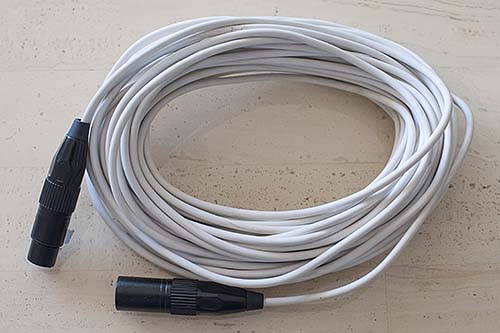
I have published another article hereabout constructing a remote cable release for the nikon 10 pin connector.

Bird Watching for Photographers

Silver Gull

What is the secret of bird watching?
Bird watching is one of the most rewarding activities, as there are many different species of birds spread over many different localities. One of the reasons I enjoy bird watching so much is that I also enjoy photographing the birds.
Birds are generally shy creatures and are easily frightened away, so the secret is to slowly stalk the birds by moving toward them very slowly, stopping for a few seconds, then moving forward again, be aware of the birds movements and stop if the bird starts to get agitated.
In dry areas, stalk the birds near a watering place which they frequent and use a hide or move toward the bird with some bushes between the subject to make it more difficult for the bird to see you. A pair of binoculars is very handy to  keep the bird in view.
It is very useful to study any local, council or government information on the location of any nature reserves and wetland reserves to find suitable locations to know where to concentrate your searching. Find out if any migratory birds transit through your local area and find out the places they congregate at and the time of year in which they migrate. Certain birds migrate and breed in certain areas the same time ind in the same location each year.
Birds are frightened when there are many people around, so it is best to concentrate your searching when few people are in the area.
One of the most important things with bird watching is to take the utmost care to ensure that the birds nesting and breeding activities are not disturbed.

Bird Photography Tips

Cattle Egret

Photography of birds is one of the most difficult subjects to capture, here we will give you some tips which assist in improving your bird captures. The above image of a Cattle Egret was photographed in a Zoo environment.

  • Frequent places where birds regularly visit, such as honey eaters at certain flowers or birds at water holes.
  • Use a long lens to bring the bird closer.
  • Use a camera with a smaller sensor, a Nikon DX format camera is better than an FX format camera.
  • Use a bird hide.
  • Stalk the birds so as to not scare them.
  • Birds are easier to photograph in Zoos or nature reserves.
  • Walk through aviaries are excellent to get closer to many rare birds.
  • Walking around the shores of lakes or inlets may enable you to get closer to water birds.
  • Using a tripod will give you much sharper images especially when using long lenses for birds.
  • A monopod is very useful for stabilizing a long lens.
  • If a moniopod or tripod is not available, stabilize the camera against some firm object.
  • Falconry Demonstrations can be good to get closer to the birds.
  • The use of  binoculars are very useful to watch where birds are.
  • Use fast shutter speeds to  help freeze the action.
  • Use low apertures also to help freeze the action.
  • Join a bird watching club to help find the location of birds.
  • Get some bird books to study the habits and feeding patterns of birds.
  • Early morning or late evening are good times to find birds, also the lighting is better at these times.
  • If photographing birds near nests be very careful to not disturb the birds.
  • Be careful of the back ground to ensure it does not intrude into the photograph.
  • The best bird photographs are generally captured in the wild, in their natural environment.
  • Try to get as close to the bird as possible, by gradually approaching the bird and getting images as you approach, as you get closer the bird may fly off, but use this opportunity to get a flight image as the bird takes off.

Bird Watching Camera

Brown Thornbill at Nest

A commonly asked question is, what is the best bird watching camera and I will try to answer that question.

There is no doubt that the best type of camera for bird watching is the digital single lens reflex camera. This type of camera shows exactly what is on the cameras sensor in the viewfinder. In the Nikon brand there are in general two categories of these cameras, FX cameras which have a sensor the same size as 35mm film, which is 24x36mm, and DX cameras which have a smaller sensor with dimensions of 23.6 x 15.6 mm. The DX camera sensors have a much higher pixel density than the FX sensors.

As a result of DX sensors being smaller than FX sensors the DX sensors offer a multiplication factor to the focal length of the lens being used, for example 300mm lens on an FX camera will become a 300×1.5=45mm.

One of the best and newest reasonably priced cameras for bird watchers is the new Nikon D7000 camera or the more expensive D300s camera. The D300s will be the better camera for this type of photography as it has slightly faster focussing, however the D7000 camera will perform excellently for this type of photography.

It is best to use lenses with vibration technology to help reduce the effects of any camera movement when used for bird watching. The most desirable lenses for birds are in the 300-500mm in focal length range.

Some of the following accessories will also be very useful for bird watching:

  • Tripods with a remote control are somewhat inconvenient to carry.
  • Monopods give excellent stability and are more convenient to carry.

Best Bird Photography

Australian, Kookaburra

I believe the best bird photography is obtained by photographing birds in their natural surrounding in the wild. When birds are photographed in aviaries they generally do not look natural in their surroundings.

To photograph birds naturally requires lots of patience and long lenses. Many varieties of water birds are quite large and can be captured with lenses of around 300mm. But many smaller birds such as wrens and robins will require longer lenses of up to 500-600mm.

There are several methods that can be used to get closer to wild birds. Most birds are very timid and will fly away quickly as you approach. One successful method is to stalk the bird by slowly moving toward the bird stopping for a  few seconds, then gradually moving forward again and stopping, if this is done slowly you can sometimes approach quite close to the bird. Using this method it is also possible to get a flight shot of the bird as it takes off.

Another successful method to get close to birds is to use a bird hide, the hide is placed close to where birds frequent so that they get used to it and then you wait in the hide for the bird to approach. This method can be quite successful if the hide is placed close to where the bird may come for water or food.

Some of the best bird photography I have seen is in the links in this blog.

Bird Photographers

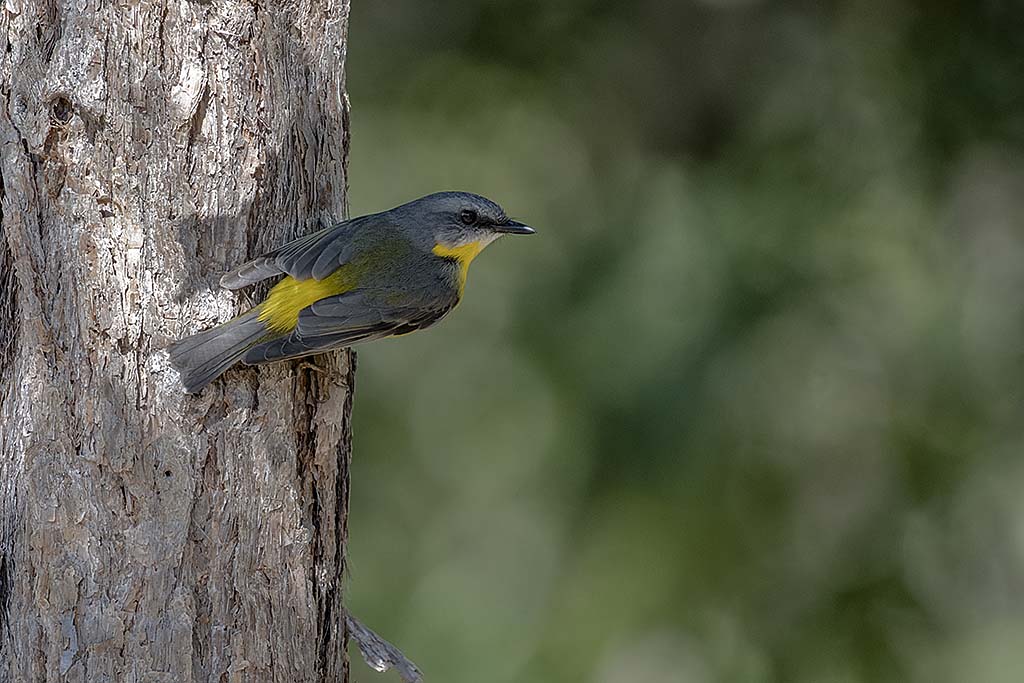
Yellow Robin

Personally I love being inspired by other bird photographers, mainly to get new ideas and to learn the approach of other wonderful bird photographers. In this post I will give links to other photographers which I admire and can learn from.

I hope you enjoy them and hopefully learn from them.

Arthur Morris – Birds as Art

Moose Peterson Wildlife Photography

Ronnie Gaubert – Pbase

Ronnie Gaubert’s Nature Photographers Gallery

Bob Steele

Brian Small

Jim Zip

We will add to the above links as time progresses.

Bird Photography Equipment

Rainbow Lorikeet

There are many  different situations with bird photography and different equipment will be required depending on the circumstances. The best type of camera for bird photography is the Digital Single Lens Reflex camera.

Where birds come to a particular area frequently and this can be because of food, water or because the birds are nesting, a relatively short lens can be used and the camera placed on a tripod with the camera remotely controlled. In these circumstances lenses of a focal length up to 100mm can be used successfully. Be careful when photographing near nesting birds as the birds should not be disturbed at any time. I have taken images of many birds with this type of setup.

Photographing birds in aviaries is one of the easiest ways to photograph birds, however it is not the best way as the birds are not in their natural environment. Walk through aviaries will enable you to photograph birds with lenses of around 200mm. I find a long close up lens is good for this type of photography. I use a Nikon 200mm Micro lens for this type of application.

Photographing wild birds in their natual environment is the main aim of the bird photographer. Photographing wild birds requires very long lenses. Generally lenses of 300mm up to 600mm are required. There are zoom lenses ranging from 100mm to 500mm, however many of the zoom lenses do not have large enough apertures, many having apertures up to f/5.6. Generally apertures of at least f/4 are required.

The following are some examples of good wild bird lenses:

  • 600mm f/4,
  • 500mm f/4,
  • 400mm f/4,
  • 400mm f/2.8,
  • 300mm f/4,
  • 300mm f/2.8.

Some of these lenses are huge in size and weight and also cost a small fortune, generally a lens with vibration reduction or image stabilisation is required, to help stabilise the lens from any camera movement. Teleconverters can be used with these lenses to0 give an effective focal length multiplier of 1.4 times, 1.7 times and 2.0 times. However these teleconverters will also increase the minimum aperture of the lens. When using teleconverters, lenses with a low aperture of f/2.8 will perform better than lenses with a higher aperture. A 2.0 times teleconverter can increase the focal length of a 600mm lens to 1,200mm or increase a 300mm lens to 600mm. Teleconverters will always work better with fast fixed focal length lenses rather than zoom lenses.

Long lenses greater than 300mm will require a monopod or tripod to help stabilise the lens and help to obtain sharper images.

Other accessories helpful to obtain better bird photographs are as follows:

  • Tripod,
  • Monopod,
  • Camera remote control.

There is some more information on selecting a bird watching camera here.